Conferences and writing
Sustainable Photography?
-
What Pollen Knows;

London Conference in Critical Thought
-
Salt Rhyne; brackish methodologies and slow seeping
Set within an eco-feminist praxis of matter, fluidity, care and porousity, this paper considers how brackish waters, as slow sites of exchange, offer new ways of thinking about methodological ‘slow attention’ in critical photographic landscape practice. As a form of re-attunement to the world, a desire to ‘slow’ can invoke temporal understandings about ecologies and matter to open up possibilities for change against ecological damage. This paper is focussed upon slow work made in an industrial area of Avonmouth in the South West of England, close to the tidal River Severn / Afon Hafren. This site is criss-crossed by ancient drainage channels called rhynes (‘ri:n/ “reen”; from Old English ryne or Welsh rhewyn or rhewin ‘ditch’), which interconnect as watery grids to become sites of exchange between saline and fresh water, particulate and liquid, and pollutant and actant, in a slow, brackish mingling. Developing practice research in this site, and, I argue, within an exchange of slow, brackish methodologies, means that kinships and more-than-human awareness begin to ‘seep’ into existence. This paper outlines how these slow, methodological exchanges mingle with one another, to implicate material agency in the work, critiquing dominant orientations, (Ahmed, 2006), and contest notions of waste, value, discard and return (Leroy, 2017), through slow pinhole exposures, sound recording and writing. I conclude the paper by showing work from this project, pinhole photographs made with exposure times between 4 and 25 minutes, washed in rhyne water.
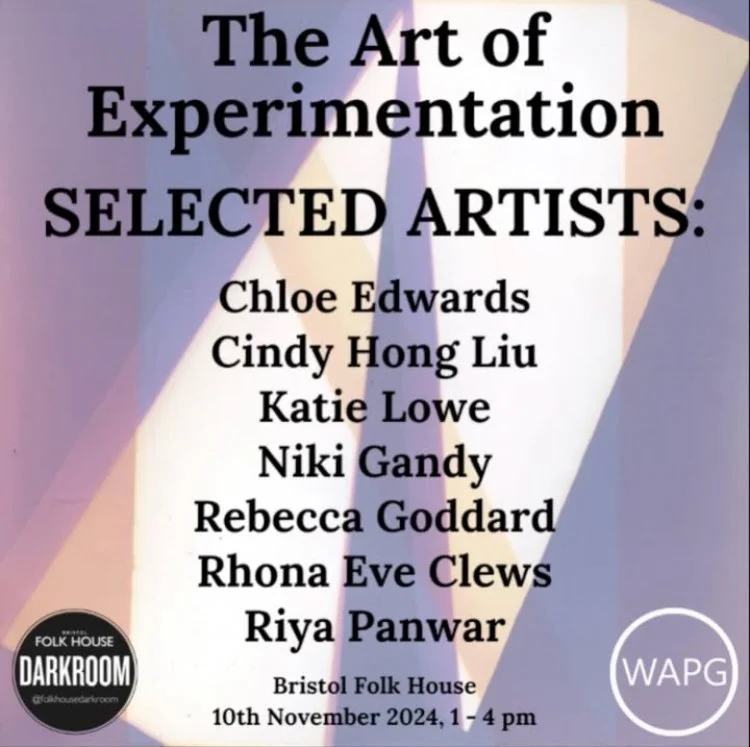
The Art of Experimentation